Pop art history: from Warhol to now
Pop art began in mid-1950s Britain with artists such as Richard Hamilton and Eduardo Paolozzi, then exploded in 1960s America with Andy Warhol, Roy Lichtenstein and Claes Oldenburg. It used adverts, comics, brands and celebrity. Its descendants include Keith Haring, text artists like Ed Ruscha and Barbara Kruger, and today's slogan art.
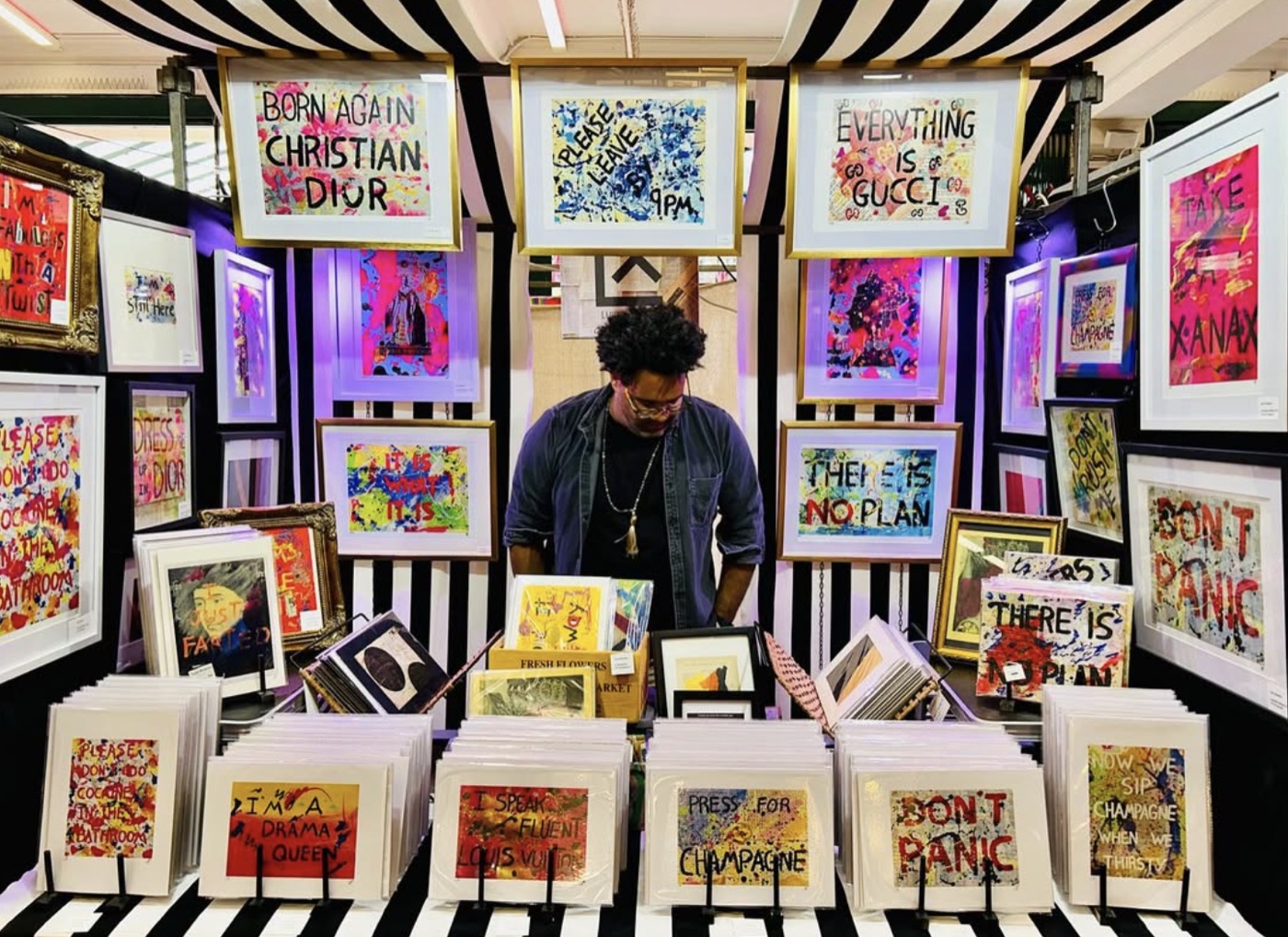
I make pop art for a living, so I'm legally required to love Andy Warhol. (I'm not, but I do.) Here's the story of pop art in the time it takes to drink a coffee, and why it's still everywhere, including on my stall in Covent Garden.
It started in London, actually
Everyone thinks pop art is American. It isn't, originally. In the 1950s a group of artists and writers in London called the Independent Group started taking popular culture seriously: adverts, comics, film, packaging, American magazines. In 1956, Richard Hamilton made a small collage with a ridiculously long title, Just what is it that makes today's homes so different, so appealing?, full of bodybuilders, tinned ham and a lollipop with the word POP on it. It's often called the first pop art work.
Eduardo Paolozzi was cutting up magazines and making collages from adverts even earlier. Britain had pop art before it had central heating.
Then America turned it up
In the early 1960s, pop art went big in New York.
- Andy Warhol painted Campbell's Soup Cans (1962), 32 canvases of soup, and silkscreened Marilyn Monroe, Elvis and Coca-Cola bottles. His big idea: the things everyone sees every day are worth art. He also made the art itself look mass-produced, on purpose.
- Roy Lichtenstein blew up comic-book panels into huge paintings, complete with dots and speech bubbles. His Whaam! (1963) hangs at Tate Modern.
- Claes Oldenburg made giant soft sculptures of hamburgers, toilets and lipsticks.
- Jasper Johns and Robert Rauschenberg opened the door just before, with flags, targets and everyday objects in art.
The art world was horrified. The public loved it. That's usually a good sign.
Meanwhile, back in Britain
Peter Blake co-designed the cover for The Beatles' Sgt. Pepper's Lonely Hearts Club Band (1967), one of the most famous pieces of pop art ever made, and you can buy it on vinyl. Pauline Boty was one of the few women in early British pop, painting film stars and politics with real wit. A young David Hockney was part of the scene too.
Words become the art
This is the bit I care about. Pop art loved words: brand names, speech bubbles, adverts. Later artists made the words the whole point.
- Ed Ruscha painted single words and phrases in huge, glossy letters from the 1960s onwards.
- Barbara Kruger put bold slogans over black-and-white photos in the 1980s.
- Jenny Holzer turned one-line statements, her Truisms, into posters, LED signs and benches.
- Tracey Emin wrote messages in neon, which is basically the most London thing ever.
When I paint "Please Don't Do Cocaine in the Bathroom" in big black letters over bright colour, I'm a very distant, very cheeky cousin of all of them.
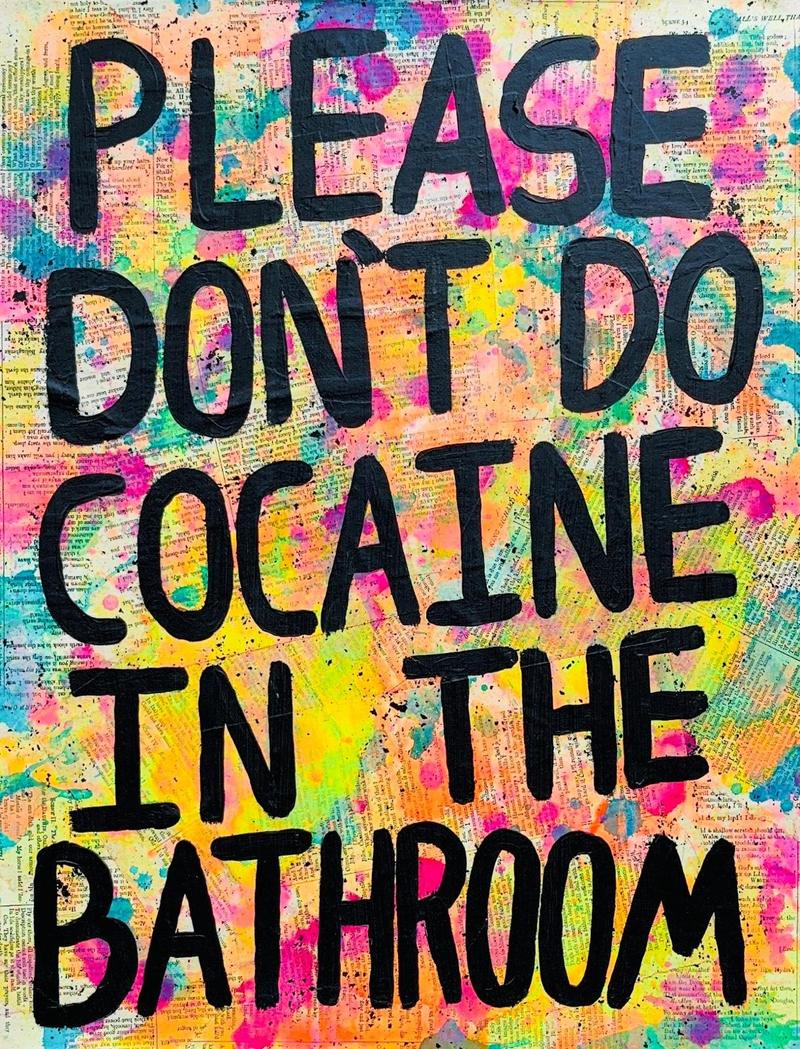 View piece
Please Don't Do Cocaine in the Bathroom (Multicolour)
View pieceChanel #5
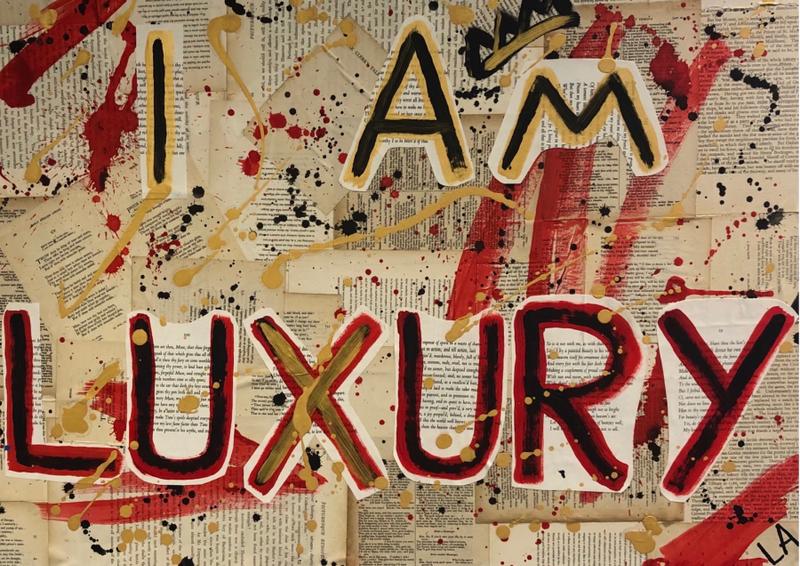 View piece
I Am Luxury
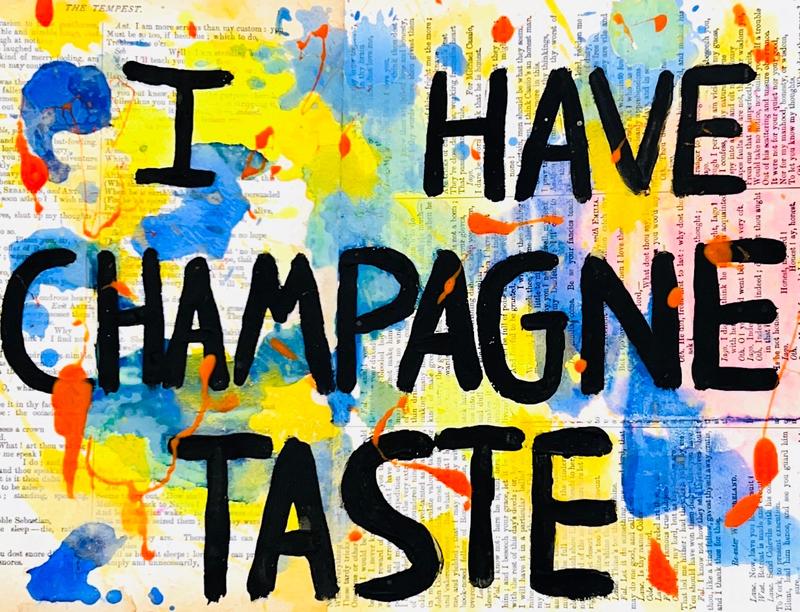 View piece
I Have Champagne Taste
The 1980s: street, graffiti and Basquiat
Keith Haring drew in chalk on empty advertising boards in the New York subway, then opened the Pop Shop to sell affordable art to everyone. Jean-Michel Basquiat mixed words, crossings-out, crowns and raw colour, and is one of the artists who inspires my own work. Pop art left the gallery and went back to the street, where it started.
Pop art now
Today pop art is everywhere: fashion collaborations, street art, slogan T-shirts, Instagram. Banksy uses pop art tricks to make political jokes. Takashi Murakami blends anime and luxury brands. And on market stalls and Instagram feeds all over the world, independent artists are making slogan art about modern life: brands, parties, therapy, champagne and bad decisions.
Why pop art still works
- It's instant. You get it in a second.
- It's funny. Or at least cheeky. Art doesn't have to be serious to be good.
- It's about real life. Shopping, celebrities, brands, nights out.
- It's for everyone. Warhol wanted art that felt as common as a can of soup. Prints keep that spirit alive.
How my work fits in
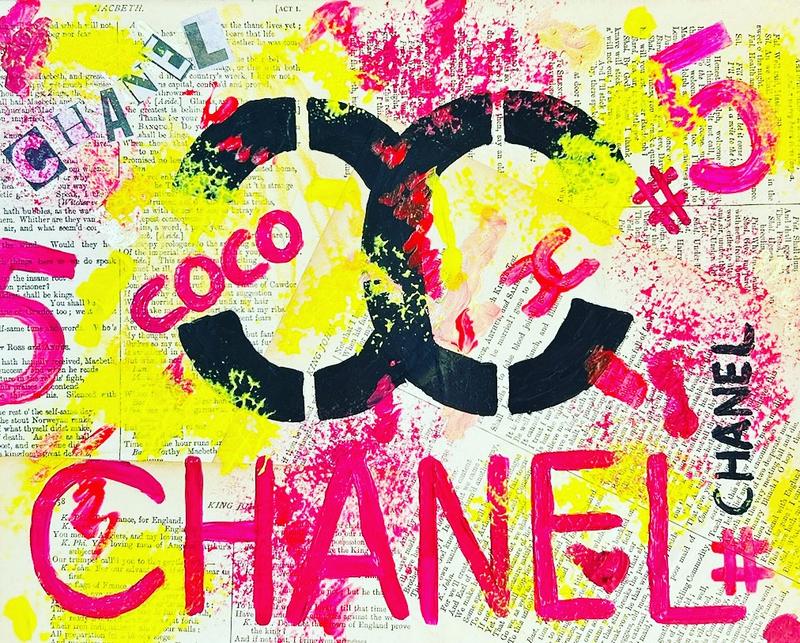
I hand-paint slogans onto antique book pages, so every piece mixes something old (the paper, sometimes a whole antique portrait) with something very now (the joke). I'm inspired by music, films and fashion, which is why you'll see Chanel, Louis Vuitton and champagne all over my stall. It's pop art: the everyday, turned up loud. Read more about the paper in antique book page art.
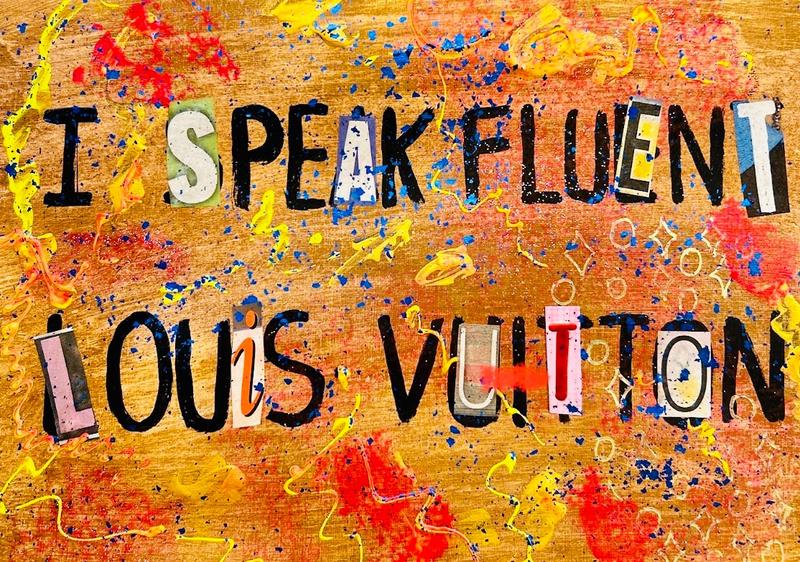 View piece
I Speak Fluent Louis Vuitton (2023)
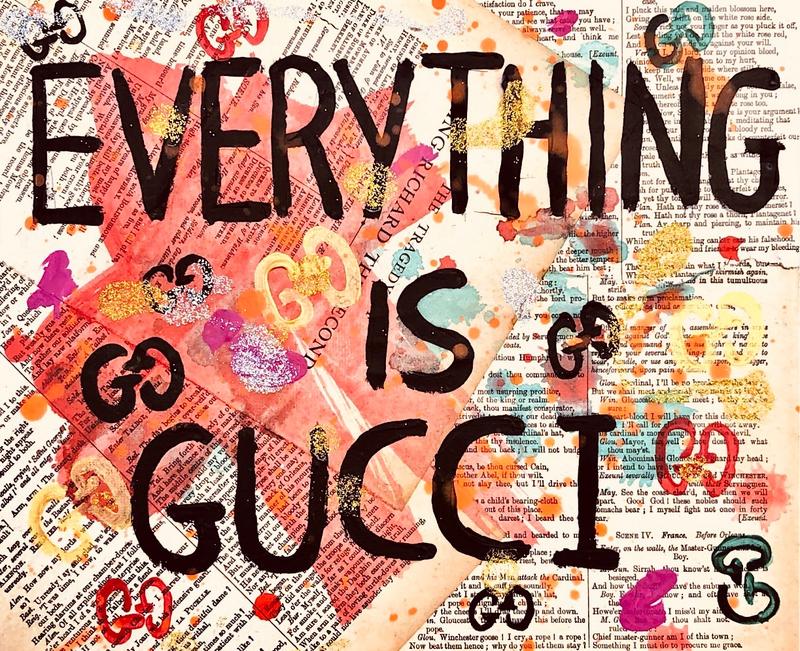 View piece
Everything Is Gucci (2022)
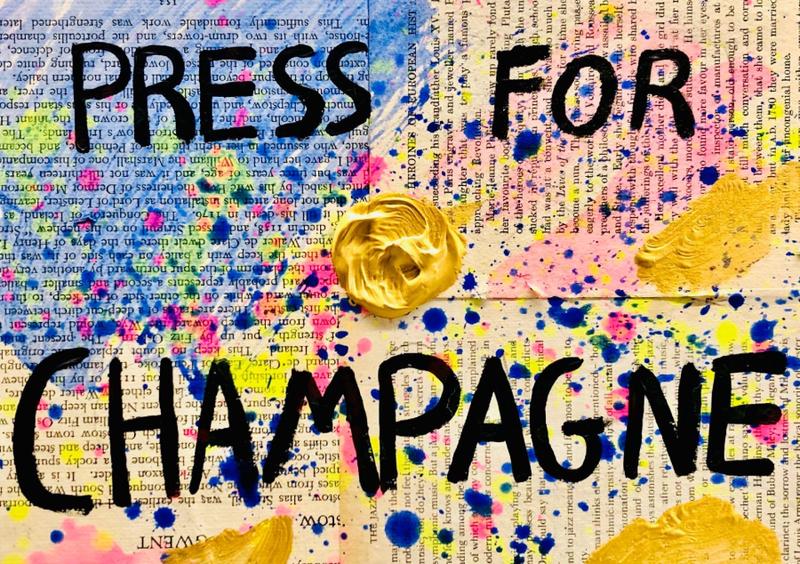 View piece
Press for Champagne (2021)
 View piece
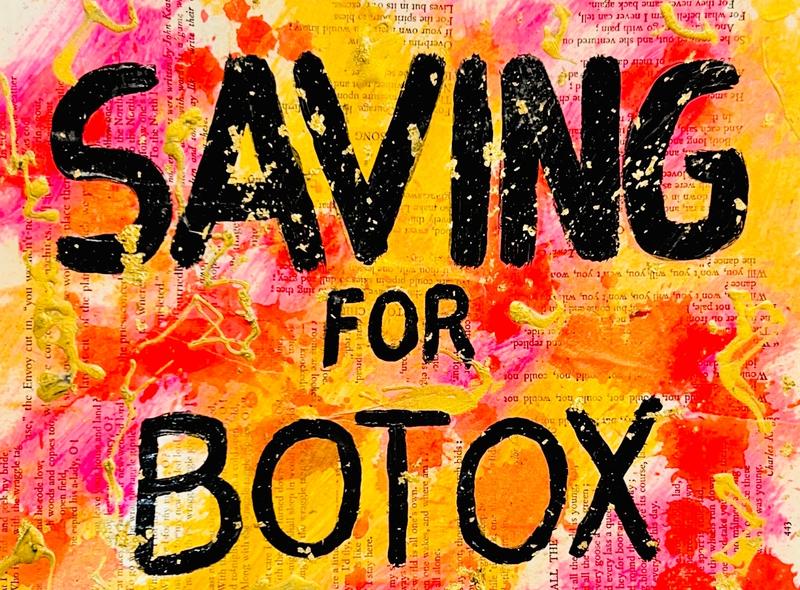
Saving for Botox
Pop art questions
Pop art began in Britain in the mid-1950s with the Independent Group, including Richard Hamilton and Eduardo Paolozzi, before growing in the USA with Andy Warhol, Roy Lichtenstein and Claes Oldenburg.
Bold colour, everyday objects, brands, comics, celebrities and humour, often made to look mass-produced.
Well-known works include Andy Warhol's Campbell's Soup Cans and Marilyn prints, Roy Lichtenstein's Whaam! and Peter Blake's cover for Sgt. Pepper's Lonely Hearts Club Band.
Yes. Its influence is everywhere in street art, fashion and slogan art, including independent artists like Luis Alvarez in Covent Garden.
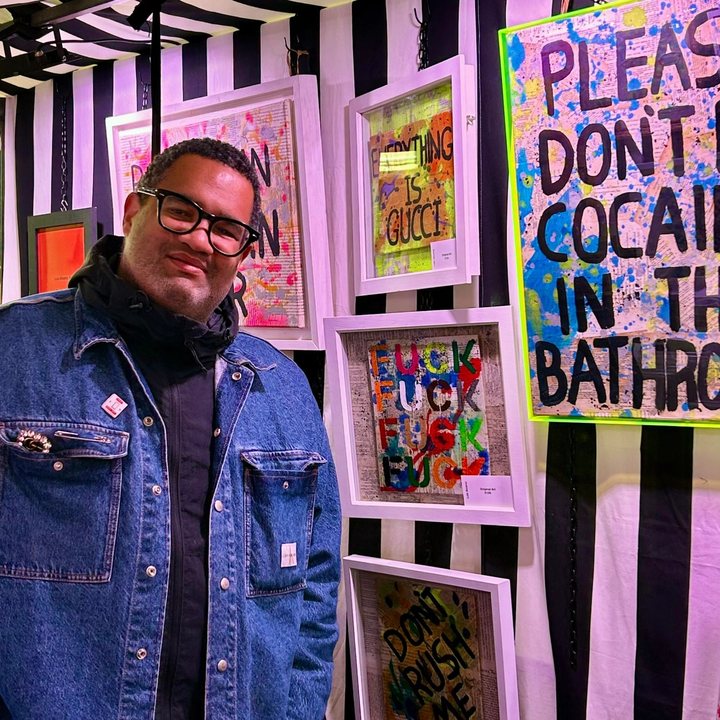
Pop artist at Jubilee Market Hall, Covent Garden, since 2021. Hand-paints bold, funny slogans on antique book pages. More about Luis.
More from the blog.
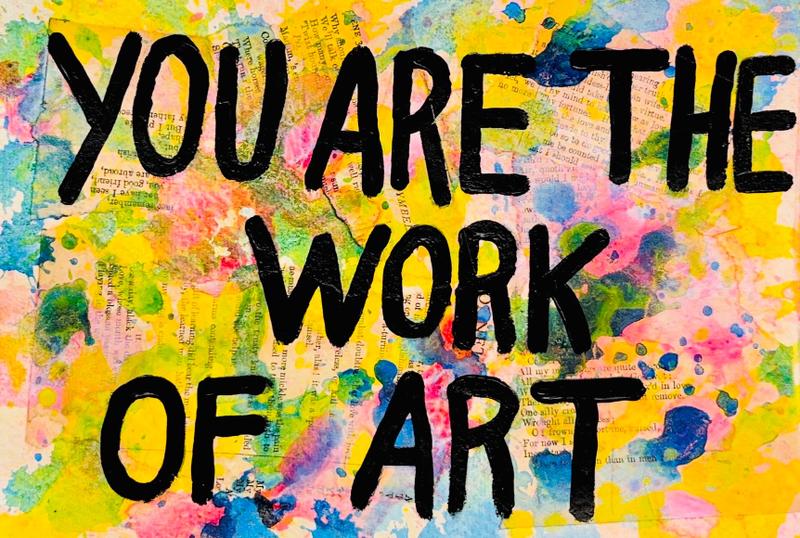
How to support independent artists in the UK (some ways cost nothing)
How to support independent artists in the UK: buy direct, leave a review, share their work, commission a piece. Some of it costs nothing. From a London artist.
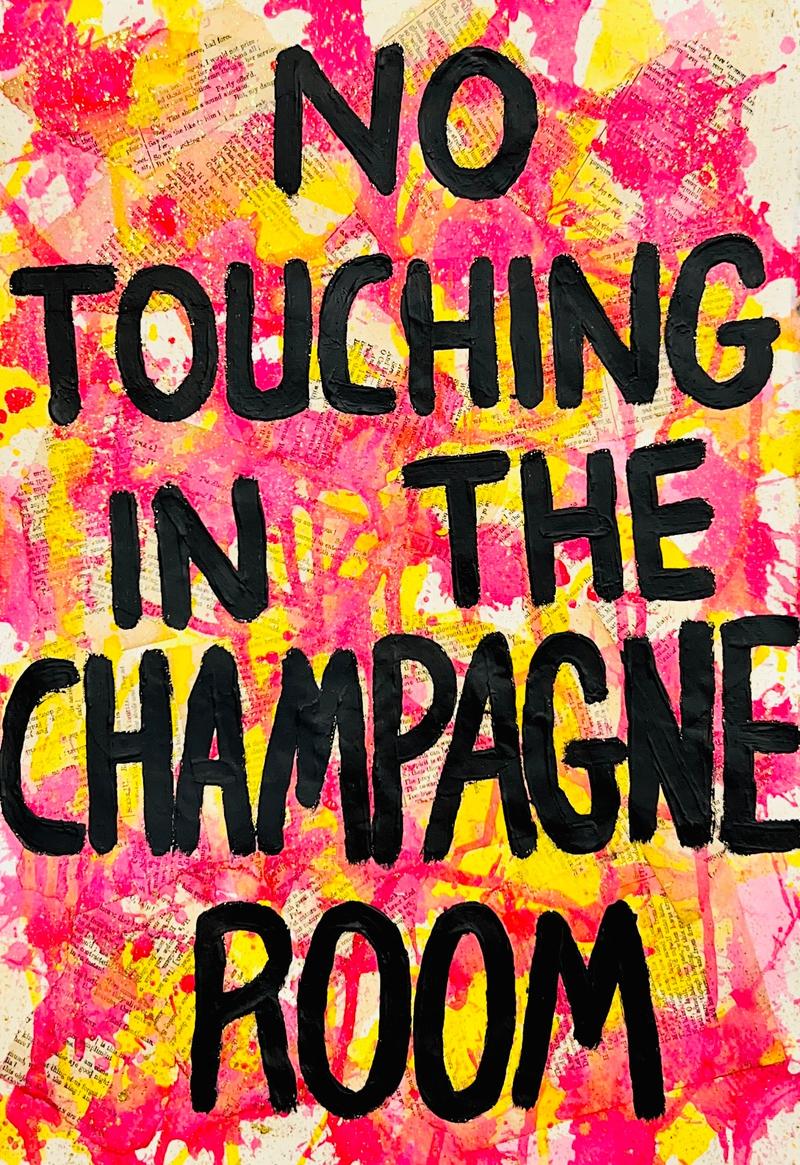
Art that makes you laugh: why funny prints are trending
Why funny art prints are everywhere: the end of beige, the rise of personality at home, and why a laugh is the best thing a room can give you. By Luis Alvarez.
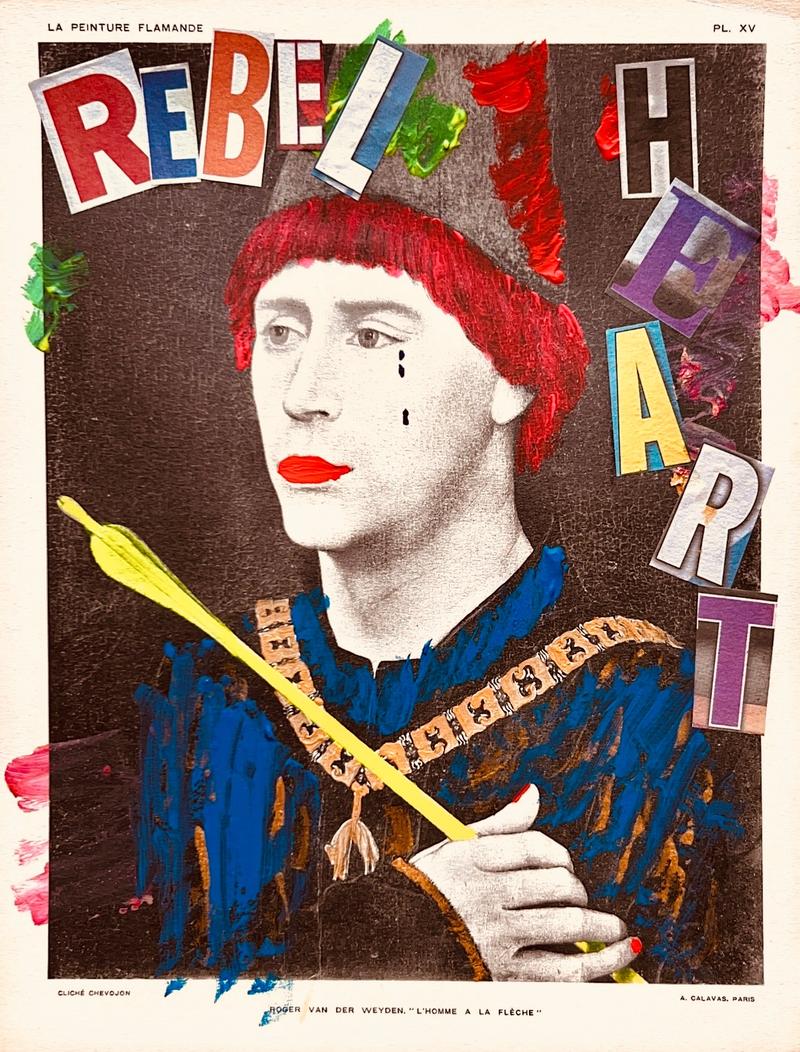
Antique book page art: what is it, and why do people love it?
What is antique book page art? London artist Luis Alvarez explains painting on antique book pages and old portraits, why each piece is unique and how to care for it.