
How to hang art without damaging walls (a renter's guide)
To hang art without damaging walls, use removable adhesive picture strips rated for the frame's weight, a picture ledge or shelf to lean frames on, picture rail hooks if your home has a rail, or tiny-pin hooks that leave holes easily filled. Light, unframed prints can go up with low-tack tape. Check your tenancy before drilling.
Most of my customers in London rent. Most of their landlords think one nail hole is a crime against architecture. So every weekend, after someone picks a print at my stall, I get the same follow-up question: "But how do I put it up without losing my deposit?"
Here's everything I tell them.
First: check the rules
Read your tenancy agreement. Some allow small picture hooks, some say nothing, some ban anything that marks the wall. If in doubt, ask your landlord or agent in writing. A short email now beats an argument at check-out.
Option 1: Removable adhesive strips
Picture-hanging strips that peel off cleanly are the renter's best friend. They come in pairs that velcro together: one side on the frame, one on the wall.
How to use them well: 1. Check the weight rating on the pack and stay well under it. Heavier frames need more strips. 2. Clean the wall and the frame back with rubbing alcohol (not a household cleaner, which leaves residue) and let it dry. 3. Press each strip firmly for about 30 seconds. 4. Wait the time stated on the pack before hanging the frame. 5. To remove, pull the tab straight down slowly, parallel to the wall. Never pull it towards you.
Watch out for: freshly painted walls, textured walls, wallpaper and very cold or damp rooms. Strips don't love bathrooms.
Option 2: A picture ledge
A picture ledge is a narrow shelf with a lip. You fix the ledge once (or rest it on furniture) and lean frames on it. Swap art whenever you like, layer frames in front of each other and never make another hole.
It's perfect for gallery-wall people who change their minds a lot. Which is everyone.
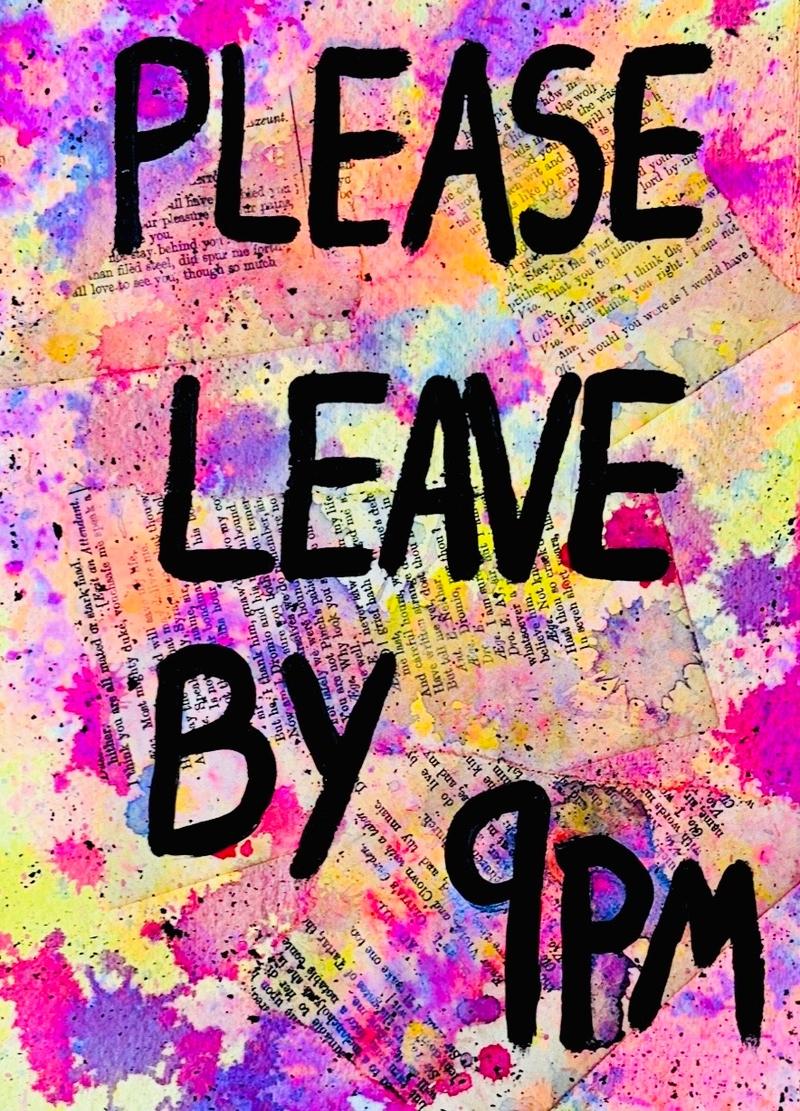
View piecePlease Leave by 9pm (2026)
 View piece
Take a Xanax
 View piece
It Is What It Is
 View piece
This Ain't the Ritz (Black and White)
Option 3: Lean it
The simplest option of all. Lean a big frame on a sideboard, a mantelpiece, a chest of drawers or even the floor. Layer a smaller print in front for a relaxed look. It looks deliberate, it costs nothing and it's how a lot of interiors magazines style rooms anyway.
Use a small piece of non-slip pad or a bit of blu-tack on the bottom edge so it doesn't slide.
Option 4: Picture rail hooks
Lots of older London flats have a picture rail, the wooden moulding running round the room near the ceiling. Hooks sit over the rail and art hangs from cord or chain. No holes at all, and very period-appropriate.
Option 5: Tiny-pin hooks
If small holes are allowed, hardwall hooks with thin steel pins leave marks the size of a pinprick, easily filled with a dab of filler when you move. They hold far more than you'd expect. Use the right hook for your wall type (plasterboard and solid walls are different).
Option 6: For light, unframed prints
An unframed A4 print weighs almost nothing. You can use:
- Washi tape on the corners, which looks fun and peels off easily.
- Bulldog clips on a nail or hook, for a studio look.
- Magnetic poster hangers, wooden strips top and bottom.
Avoid sticky putty directly on the back of prints you care about, as it can leave oily marks on paper and on some paints.
Weight guide
| What | Roughly | Best option |
|---|---|---|
| Unframed A4 print | very light | Washi tape, clips, magnetic hanger |
| A4 frame with acrylic | light | Adhesive strips |
| A3 frame with glass | medium | Adhesive strips (more of them) or a pin hook |
| Large framed original | heavy | Lean it, or a proper fixing with permission |
Acrylic glazing is much lighter than glass, which matters a lot for strips. More on that in how to frame art prints.
Where to hang it
Same rules whatever you use: centre of the art around 145 to 150cm from the floor, and 15 to 25cm above furniture. Full details in what size art print for a living room.
Moving out?
- Remove strips slowly, pulling straight down.
- Fill any pin holes with a little filler and smooth it with a damp cloth.
- Touch up with matching paint if you have it.
- Take photos of the walls before and after, just in case.
Student or first flat?
If you're decorating on a tiny budget, read art for student flats or art prints for your first home. Prints are £20, and a whole wall can go up in an evening without a drill in sight.
Hanging art questions
Use removable adhesive picture strips rated for the weight, a picture ledge, picture rail hooks, or simply lean frames on furniture.
They're designed to remove cleanly if you follow the instructions: clean the wall, stay under the weight limit and pull the tab straight down slowly. They can lift fresh or poor-quality paint.
Heavy frames are best leaned on furniture or the floor, or hung from a picture rail. Ask your landlord before using strong fixings.
A picture ledge or adhesive strips for frames, and washi tape or clips for unframed prints. Check your tenancy first.

Pop artist at Jubilee Market Hall, Covent Garden, since 2021. Hand-paints bold, funny slogans on antique book pages. More about Luis.
More from the blog.

Art prints for your first home: a room-by-room starter kit
Just got the keys? Covent Garden artist Luis Alvarez on art prints for your first home: what to buy first, room by room, on a first-home budget. From £20.

How to choose art for your home (without overthinking it)
How to choose art for your home without overthinking it. London artist Luis Alvarez on picking art by room, colour, size and gut feeling, with real examples.

What size art print for a living room? The simple rules
What size art print do you need for your living room? Simple rules, a size table (A4, A3, A2) and how to make small prints fill a big wall, from a London artist.