
How to choose art for your home (without overthinking it)

To choose art for your home, start with how you want the room to feel, pick one piece that makes you react, size it to the wall (about two-thirds the width of the furniture below), and pull one colour from the art into the room. Buy what you love first and match the room second.
Every weekend someone stands at my stall in Covent Garden holding two prints, looking at me like I'm about to defuse a bomb. "Which one?" I always ask the same thing back: which one did you laugh at first? That's usually the answer.
Choosing art is easier than people make it. Here's the method I give everyone, from first-time buyers to people with more walls than sense.
Step 1: Decide how the room should feel
Forget colour charts for a minute. Ask what the room is for.
- Living room: where you talk, host and slump. Art here should start conversations.
- Kitchen: busy, social, steamy. Something fun and robust.
- Bedroom: first and last thing you see. Calm, soft, or quietly motivating.
- Hallway: the handshake of the home. A bold welcome or a joke on the way out.
- Bathroom: small wall, captive audience. The best place for a funny print.
- Home office: what you stare at between video calls. Motivation, with a wink.
Once you know the feeling, half the options disappear on their own.
Step 2: Trust the gut reaction
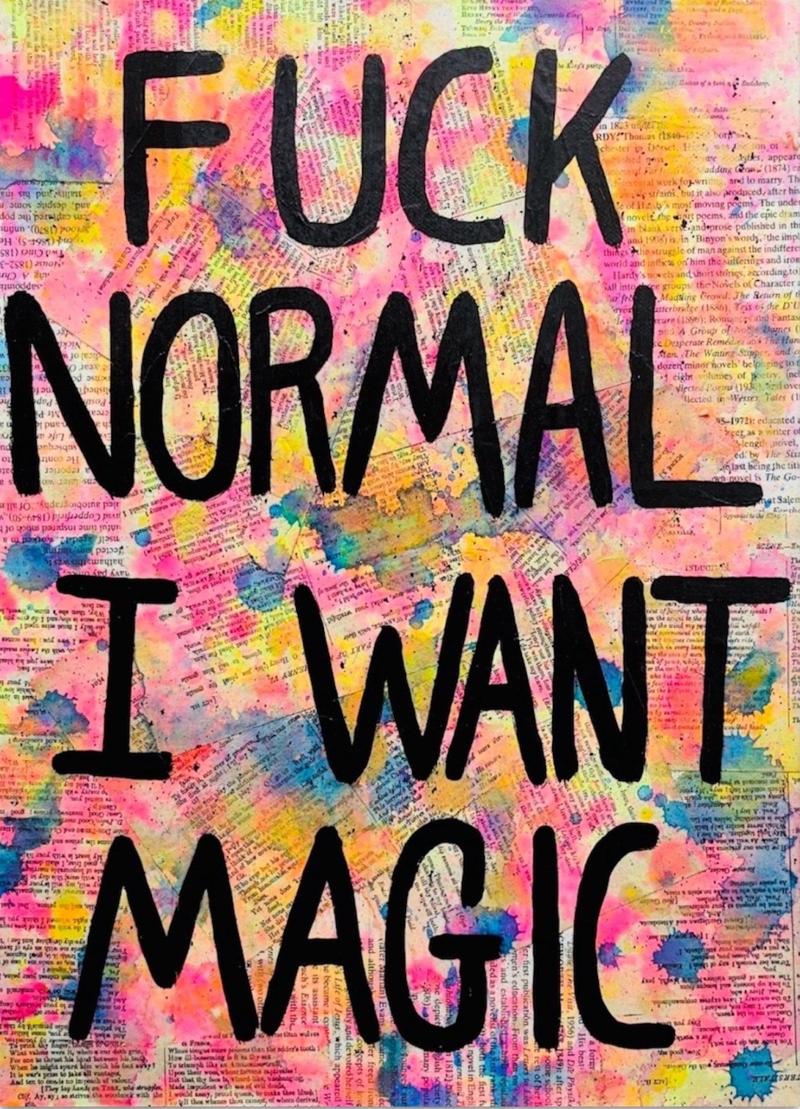
Art should make you react. Laugh, smile, feel something, even disagree with it. If you look at a piece and feel nothing, it'll become wallpaper within a month. The pieces people keep for decades are the ones that got a reaction on day one.
View pieceMore Joy
 View piece
Ride the Waves
 View piece
I Know I Am Beautiful
 View piece
Don't Hide Your Magic
Step 3: Get the size right
This is where most homes go wrong. Art that's too small looks like it's apologising. Quick rules:
- Over a sofa or bed, aim for art about two-thirds the width of the furniture.
- Hang the centre of the art at around 145 to 150cm from the floor.
- Leave about 15 to 25cm between the top of the sofa and the bottom of the frame.
- If one print is too small, group two or three together and treat them as one piece.
I've written a whole guide on what size art print for a living room with a size table.
Step 4: Use colour as a link, not a match
You don't need art that matches the sofa. You need one link. If a print has hot pink in it, add one pink cushion or a pink book on the shelf. Suddenly the room looks planned. Matching everything perfectly looks like a showroom. Linking one colour looks like a person with taste lives there.
Bright pop art works brilliantly in neutral rooms. White, grey and beige walls are basically a gallery waiting for colour.
Step 5: Mix, don't match
The best walls mix things: an original next to a print, an antique image next to a slogan, a big piece next to small ones. Mixing makes it look like a collection you built over years, even if you bought it all on Saturday.
 View piece
Queen for a Day (Anne, 1702 to 1714)
 View piece
The Best Is Yet To Come (Blue)
 View piece
I Am Luxury
 View piece
There Is No Plan (Pink)
Step 6: Choose words carefully
If you love slogan art (hello), think about who reads it. A rude print in the downstairs loo of a family home is brave. The same print in your own flat is just honest. Funny in the kitchen, motivational in the bedroom, rude wherever your mother won't see it. My funny art prints guide sorts the clean jokes from the filthy ones.
Step 7: Frame it properly
A good frame makes a £20 print look like £200. A white mount and a simple black or wood frame works with almost everything. If you've never done it, read how to frame art prints.
Common mistakes
- Hanging too high. Bring it down. Eye level, not ceiling level.
- Buying everything at once. Let the collection grow.
- Choosing "safe" art. Safe art is invisible art.
- Ignoring the light. Bright sun fades works on paper. Keep originals out of direct sunlight.
- Being scared of colour. One loud piece in a calm room is the whole trick.
Still stuck?
Send me a photo of the wall on WhatsApp. I'll tell you honestly what would work, even if it's not something I sell. Or come to the stall in Covent Garden on a weekend and hold a few pieces up against your phone photos. That's what everybody does, and it works.
Choosing art questions
Pick a piece that starts conversations, about two-thirds the width of the sofa, hung with its centre around 145 to 150cm from the floor. Link one colour from the art to a cushion or object in the room.
Link, don't match. One shared colour between the art and the room is enough. Matching everything looks like a showroom.
A single bold piece, or a tight group of A4 prints. Small rooms can take strong colour as long as the wall isn't crowded.
Buy one piece you love for the room you use most. Add more slowly. See how to start an art collection on a budget.

Pop artist at Jubilee Market Hall, Covent Garden, since 2021. Hand-paints bold, funny slogans on antique book pages. More about Luis.
More from the blog.

Art prints for your first home: a room-by-room starter kit
Just got the keys? Covent Garden artist Luis Alvarez on art prints for your first home: what to buy first, room by room, on a first-home budget. From £20.
What size art print for a living room? The simple rules
What size art print do you need for your living room? Simple rules, a size table (A4, A3, A2) and how to make small prints fill a big wall, from a London artist.

How to frame art prints (and make a £20 print look like £200)
How to frame art prints so they look expensive. Mount sizes for A4 and A3, glass vs acrylic, frame colours and DIY vs a framer, explained by a London artist.